

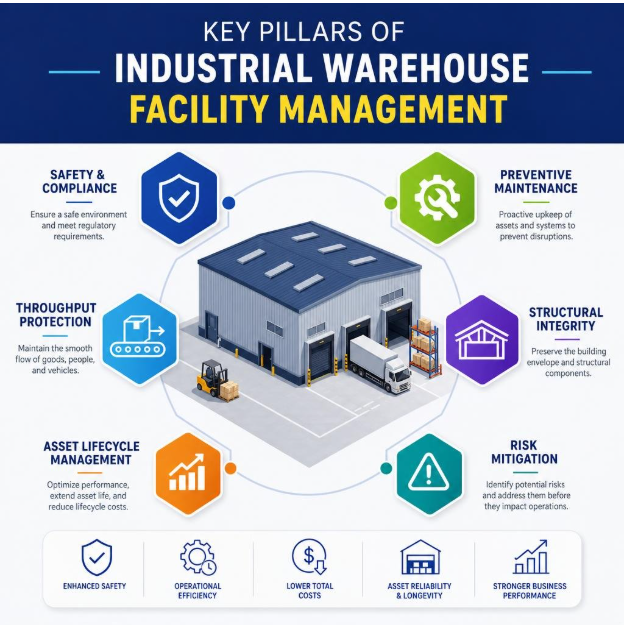
Core Pillars of Industrial Warehouse Facility Management
Industrial warehouse facility management is a comprehensive discipline that underpins the efficiency, safety, and longevity of logistics operations. It moves beyond basic upkeep to strategically manage every physical aspect of a warehouse, ensuring optimal performance. Key pillars include safeguarding throughput protection, which involves maintaining the physical flow of goods and vehicles, and ensuring the structural integrity of the building itself. This encompasses critical elements like floor load capacity, the operational reliability of dock levelers, and adequate clear height for vertical storage and equipment.
Effective facility management is also central to risk mitigation, addressing potential hazards before they escalate into costly disruptions. By focusing on the lifecycle costs of assets, facility managers can make informed decisions that extend equipment longevity and reduce long-term expenses. This holistic approach ensures that the physical environment of the warehouse actively supports, rather than hinders, the complex demands of modern supply chains.
Scope and Operational Functions of Industrial Warehouse Facility Management
The scope of industrial warehouse facility management is extensive, covering every functional zone within a logistics environment. This includes the meticulous oversight of receiving zones, where goods first enter the facility, and the strategic arrangement and maintenance of pallet racking systems to maximize storage density and accessibility. Material handling equipment, from forklifts to conveyor systems, requires continuous management to ensure peak performance and safety.
Facility managers are also responsible for maintaining cross-docking areas, high-bay lighting systems that ensure visibility and safety, and designated staging areas for inbound and outbound freight. Beyond the physical structures, facility management extends to critical operational functions like energy monitoring, which is vital for controlling utility demands and promoting sustainability. By overseeing these diverse elements, facility management ensures that the warehouse infrastructure seamlessly supports the intricate dance of goods movement, storage, and distribution.
Industrial vs. Standard Commercial Property Management
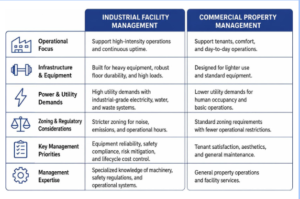
While both industrial and standard commercial property management involve overseeing physical assets, their approaches and priorities differ significantly due to the distinct operational demands of each sector. Industrial facilities, such as warehouses and manufacturing plants, are characterized by their operational intensity. They typically involve heavy equipment, require robust floor durability to withstand constant heavy loads and traffic, and demand substantial power capacity to run machinery and specialized systems. Zoning laws for industrial properties are often more stringent regarding noise, emissions, and operational hours, reflecting their impact on surrounding areas. Utility demands are significantly higher, encompassing industrial-grade electricity, water, and waste disposal.
In contrast, standard commercial properties, like office buildings or retail spaces, generally have lighter operational requirements. Their infrastructure is designed for human occupancy and lighter equipment, with less emphasis on floor load capacity or specialized power. The focus tends to be on tenant comfort, aesthetic appeal, and general maintenance of common areas. Industrial facility management, therefore, requires a specialized understanding of complex machinery, stringent safety regulations, and the critical need for continuous uptime, making it a far more specialized field than its commercial counterpart.
Essential Facility Maintenance and Asset Upkeep
At the heart of efficient industrial warehouse operations lies a robust program of essential facility maintenance and asset upkeep. This goes beyond reactive repairs, focusing instead on proactive measures that ensure continuous functionality and extend the lifespan of critical infrastructure. Key areas include meticulous HVAC upkeep to maintain optimal environmental conditions for goods and personnel, regular inspection and repair of dock seals to preserve energy efficiency and prevent environmental ingress, and the maintenance of complex electrical substations that power the entire facility.
Fire suppression systems are paramount for safety and compliance, requiring routine checks and servicing. Overhead doors, emergency generators, and other vital equipment must be part of a comprehensive preventive maintenance schedule. This proactive approach minimizes unexpected breakdowns, reduces operational downtime, and ultimately contributes to a safer, more productive warehouse environment.
Preventive Maintenance for Heavy-Duty Infrastructure
Preventive maintenance is the cornerstone of ensuring the reliability and longevity of heavy-duty industrial infrastructure. For assets like conveyor belts, hydraulic lifts, and structural columns, regular inspections and scheduled servicing are crucial. This includes checking for wear and tear, lubricating moving parts, and ensuring all components are operating within specified parameters. The integrity of exterior elements, such as pavement integrity in loading yards and efficient drainage systems, also falls under this umbrella, preventing issues like water damage or unsafe driving conditions.
Advanced techniques like vibration analysis can detect early signs of mechanical failure in rotating equipment, while thermal imaging can identify overheating electrical components before they cause outages. By systematically addressing potential issues before they become critical, facilities can significantly reduce unplanned repairs, which AI-driven facility management systems can predict, lowering unplanned repairs by up to 25%. This proactive strategy is vital for maintaining continuous operations and avoiding costly disruptions.
Pest Elimination, Hygiene, and Sanitation Protocols
Maintaining a high standard of hygiene and sanitation is indispensable in industrial warehouses, not only for employee well-being but also for protecting stored goods and ensuring regulatory compliance. This involves implementing rigorous deep cleaning schedules to manage dust mitigation, which can affect equipment performance and product quality. Proper chemical storage protocols are essential to prevent hazards, and robust spill containment procedures must be in place for immediate response.
Beyond general cleanliness, effective pest elimination is a critical component. Pests can damage inventory, contaminate products, and pose significant health risks, leading to potential regulatory violations. Partnering with professional commercial pest control services ensures that warehouses remain free from infestations, safeguarding product integrity and adhering to health and safety standards. Comprehensive sanitation compliance, including regular air filtration maintenance and efficient waste recycling programs, further contributes to a safe, healthy, and compliant operational environment.
Technology Integration in Industrial Warehouse Facility Management
The landscape of industrial warehouse facility management is being rapidly reshaped by technology, moving from reactive maintenance to proactive, data-driven strategies. The integration of smart sensors across facilities provides real-time data on everything from equipment performance to environmental conditions. This data fuels predictive analytics, allowing managers to anticipate maintenance needs and potential failures before they occur. Digital twins, virtual replicas of physical assets, offer powerful simulation capabilities for optimizing layouts and processes.
Cloud dashboards centralize critical information, providing facility managers with a comprehensive overview of operations from anywhere. Automated work orders streamline maintenance requests and dispatch, while computerized maintenance management systems (CMMS) and enterprise asset management (EAM) platforms track asset history, schedule preventive tasks, and manage resources. This technological evolution enables precise asset tracking and delivers clear uptime metrics, transforming facility management into a highly efficient, data-informed function.
Smart Systems and Automated Material Handling
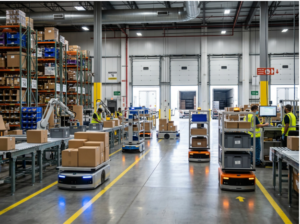
The advent of smart systems and automated material handling has revolutionized efficiency and productivity within industrial warehouses. Autonomous robots, including Autonomous Mobile Robots (AMRs) and Automated Guided Vehicles (AGVs), navigate facilities to transport goods, assist with picking, and update inventory in real-time. Automated storage and retrieval systems (AS/RS) and advanced sorting systems optimize space utilization and accelerate order fulfillment. These technologies, alongside RFID scanning and barcode tracking, significantly reduce manual labor, minimize errors, and enhance throughput.
The integration of these systems is crucial for creating a seamless operational flow. For organizations looking to enhance their logistics capabilities, exploring advanced warehouse automation solutions can provide significant competitive advantages. Such systems can drastically reduce inventory errors by up to 20% and improve order accuracy to over 99%, demonstrating the profound impact of technology on warehouse performance.
Enterprise Asset Management and IoT Monitoring
Enterprise Asset Management (EAM) systems, combined with the power of IoT monitoring, represent a significant leap forward in managing industrial warehouse facilities. IoT sensors deployed throughout a facility provide continuous monitoring of critical assets. Vibration sensors can detect anomalies in machinery, temperature tracking ensures optimal conditions for sensitive goods, and energy optimization sensors help reduce utility consumption. This constant flow of data enables predictive repairs, allowing maintenance teams to address issues before they cause costly downtime.
EAM platforms centralize all asset information, from purchase to disposal, automating work dispatch, scheduling preventive maintenance, and tracking repair histories. This comprehensive approach not only extends asset life and reduces operational costs but also streamlines compliance auditing by providing detailed records of maintenance and inspections. AI-driven facility management, leveraging IoT data, can predict maintenance needs, reducing unplanned repairs by up to 25%, turning the maintenance department into a strategic profit center.
Safety, Regulatory Compliance, and Risk Mitigation
In industrial warehouse facility management, safety, regulatory compliance, and risk mitigation are non-negotiable priorities. A robust framework ensures the well-being of personnel, protects assets, and maintains operational continuity. This involves rigorous workplace safety protocols, comprehensive emergency preparedness plans, and clearly marked egress routes. Effective contractor vetting processes are crucial to ensure all external personnel adhere to site safety standards.
Proper handling and storage of hazardous materials are paramount, requiring specialized training and facilities. Clear safety signage, regular risk audits, and adherence to ventilation standards all contribute to a secure and compliant environment. These measures collectively minimize accidents, prevent regulatory penalties, and safeguard the entire operation against potential disruptions.
OSHA, C-TPAT, and ISO Standards Adherence
Adherence to a complex web of safety and security standards is fundamental for industrial warehouses. OSHA compliance is mandatory, dictating workplace safety rules to protect employees from hazards. For facilities involved in international trade, C-TPAT (Customs-Trade Partnership Against Terrorism) security certification is vital, ensuring secure supply chains. ISO 28000 provides a framework for supply chain security management systems, while NFPA (National Fire Protection Association) fire codes set critical standards for fire prevention and suppression.
Facility management plays a key role in implementing these standards through regular safety drills, ensuring contractor certification, maintaining digital rosters for accurate headcounts, and preparing for audit readiness. Integrated facility management platforms can reduce administrative time for compliance reporting by up to 60%, while contractor compliance automation can reduce safety violations and access denials by up to 40%. Digitized emergency preparedness and live rosters can cut emergency response times by up to 50%, significantly enhancing safety and compliance.
Access Control, Gate Management, and Perimeter Security
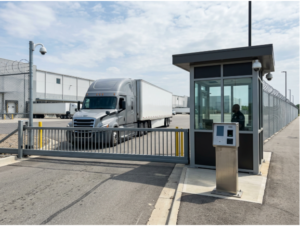
Ensuring the security and integrity of an industrial warehouse relies heavily on robust access control, efficient gate management, and comprehensive perimeter security. Gatehouse automation streamlines the entry and exit of vehicles and personnel, reducing bottlenecks and enhancing security checks. Advanced visitor management systems track everyone entering and leaving the premises, often utilizing digital badges for clear identification and access permissions.
These systems are critical for maintaining cargo integrity by preventing unauthorized access and monitoring all movements. Perimeter fencing, coupled with extensive CCTV surveillance, provides continuous monitoring and deterrence against intrusions. Implementing precise access credentials ensures that only authorized individuals can enter specific areas within the facility, creating layered security. Real-time visitor and contractor management systems can reduce access processing time by up to 70% at logistics gates, significantly enhancing both security and operational flow.
Landlord-Tenant Collaboration and Facility ROI
Effective industrial warehouse facility management often hinges on robust collaboration between property owners and tenants. This partnership is crucial for maximizing asset valuation, ensuring the longevity of the property, and optimizing operational efficiency for the tenant. Clear lease agreements define responsibilities, particularly regarding shared costs and capital expenditures. When both parties work together, they can align on maintenance schedules, facility upgrades, and long-term strategic planning.
This collaboration directly impacts tenant retention, as well-maintained and efficiently run facilities contribute significantly to tenant satisfaction. Transparent communication about property longevity and cost transparency in shared expenses builds trust and fosters a productive relationship, ultimately enhancing the return on investment for the property owner and operational success for the tenant.
Layout Optimization and Space Utilization
Optimizing warehouse layout and space utilization is a critical function that directly impacts operational efficiency and cost-effectiveness. Facility managers and tenants collaborate to ensure that the physical arrangement of the warehouse supports seamless workflows. This includes maximizing vertical clearance for high-density storage, determining optimal aisle width for equipment maneuverability, and implementing smart slotting strategies to reduce travel time for picking.
Dynamic storage solutions and modular racking systems offer flexibility to adapt to changing inventory needs. Careful planning of traffic flow helps eliminate bottlenecks, while strategic placement of goods minimizes travel distance for personnel and equipment. Poor warehouse layout can increase operational costs by up to 30% due to inefficiencies in picking, storage, and labor. Conversely, Warehouse Management Systems (WMS) can improve space utilization by up to 20% through optimized slotting and layout, demonstrating the profound impact of thoughtful design.
Lease Structuring and Shared Maintenance Responsibilities
The structure of lease agreements plays a pivotal role in defining facility management responsibilities and outcomes. Common lease types, such as triple net leases, clearly delineate maintenance boundaries, assigning most operational and maintenance costs to the tenant. However, even with such agreements, collaboration is essential for managing common areas, allocating utility costs fairly, and planning for significant capital improvements.
Regular condition reporting helps both landlords and tenants understand the state of the property and anticipate future needs. Effective facility management, supported by clear lease terms and open communication, directly impacts tenant satisfaction, reduces disputes, and preserves the long-term value of the asset. By clarifying who is responsible for what, both parties can work synergistically to maintain a high-performing and compliant industrial warehouse.
Frequently Asked Questions About Warehouse Facility Operations
How does proactive facility management reduce logistics downtime?
Proactive facility management significantly reduces logistics downtime by anticipating and addressing potential issues before they escalate into critical failures. Through predictive maintenance, enabled by IoT sensors and AI analytics, facility managers can schedule repairs during off-peak hours, preventing unplanned repairs. This approach ensures equipment reliability for critical assets like dock throughput systems, conveyor belts, and HVAC units, leading to more continuous operation. Effective facility management can reduce operational downtime by up to 30% in logistics and warehousing operations.
What regulatory standards govern industrial warehouse maintenance?
Industrial warehouse maintenance is governed by several key regulatory standards. OSHA (Occupational Safety and Health Administration) standards are paramount for ensuring workplace safety. NFPA (National Fire Protection Association) guidelines dictate fire safety, prevention, and suppression systems. ISO certifications, such as ISO 28000 for supply chain security or ISO 45001 for occupational health and safety, provide frameworks for best practices. Additionally, local building codes and specific life safety regulations must be adhered to, ensuring structural integrity and emergency preparedness.
What is the difference between warehouse management systems and facility management?
While both are crucial for warehouse operations, Warehouse Management Systems (WMS) and facility management serve distinct purposes. A WMS primarily focuses on the flow and storage of goods within the warehouse, managing inventory tracking, order fulfillment, picking, packing, and shipping workflows. It’s a software-driven system optimizing internal logistics. Facility management, on the other hand, deals with the physical infrastructure of the building itself—its maintenance, safety, security, and operational efficiency. This includes managing HVAC, electrical systems, building automation, asset maintenance for equipment like dock doors and forklifts, and overall compliance. While a WMS optimizes what happens inside the building with inventory, facility management ensures the building itself is functioning optimally and safely. They often integrate to provide a holistic view of operations.
Conclusion
Industrial warehouse facility management is a complex yet critical discipline that underpins the success of modern supply chains. From ensuring structural integrity and maintaining essential infrastructure to integrating advanced automated systems and adhering to stringent regulatory compliance, its scope is vast and its impact profound. By embracing strategic maintenance, leveraging technological innovations like IoT and AI, and fostering strong landlord-tenant collaboration, businesses can achieve unparalleled operational excellence. This proactive approach not only safeguards against disruptions but also enhances supply chain resilience, contributes to significant asset appreciation, and ultimately drives competitive advantage in a dynamic global market.
