

Introduction
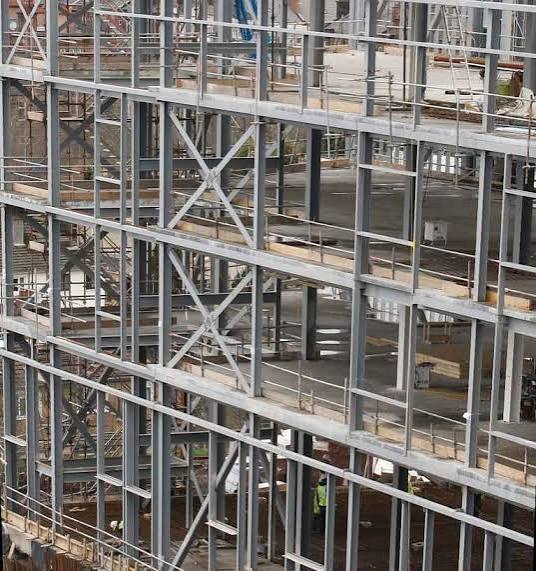
Structural engineering is changing rapidly as construction projects become more complex, deadlines become tighter, and expectations around safety, sustainability, and efficiency continue to increase. Engineers today are expected to do more than calculate loads and prepare drawings. They must understand digital workflows, evaluate materials carefully, coordinate with architects and contractors, consider environmental factors, and make decisions that support the entire lifecycle of a structure. This shift has increased the importance of reliable technical information and modern approaches to structural design. In this changing environment, structurespy com represents a useful concept for professionals interested in smarter ways to approach structural engineering and construction-related challenges.
The modern structural engineer works at the intersection of mathematics, construction technology, material science, software, and practical problem-solving. A successful design must not only satisfy technical requirements but also work effectively in the real world. For example, a structural solution may appear efficient on paper but become expensive or difficult to construct because of material availability, complicated connections, or challenging site conditions. Digital resources and engineering-focused platforms can help professionals consider these factors earlier in the design process. This makes informed decision-making an increasingly important part of modern structural practice.
The value of a smarter engineering approach is particularly visible when projects involve multiple disciplines. Buildings, bridges, industrial facilities, and infrastructure developments often require structural engineers to coordinate with architects, mechanical specialists, electrical teams, surveyors, contractors, and project managers. Better information sharing can reduce misunderstandings and improve the overall workflow. As structural engineering continues to adopt digital methods, the ability to organize information and transform it into practical decisions will become even more important.
Understanding the Changing Structural Engineering Landscape
Structural engineering has traditionally relied on established principles of mechanics, mathematics, material behavior, and construction knowledge. Those principles remain essential, but the way engineers apply them is evolving. Computer-aided design, structural analysis software, Building Information Modeling, cloud collaboration, digital documentation, and data-driven workflows are now common components of modern projects. Engineers can analyze multiple design alternatives much faster than was possible with older manual processes.
This transformation does not mean technology replaces engineering judgment. Instead, technology gives engineers more opportunities to examine alternatives before selecting a final solution. A structural engineer might compare different framing systems, evaluate material quantities, study load paths, or identify potential conflicts between structural and architectural components. The engineer still needs to understand why a particular result makes sense and whether it reflects actual site and construction conditions. Structurespy com fits into this broader movement toward combining technical knowledge with efficient digital thinking.
Another major change is the increasing emphasis on resilience. Structures must often perform under conditions that go beyond ordinary everyday loading. Depending on their location and purpose, projects may need to consider earthquakes, strong winds, flooding, temperature changes, fire exposure, heavy usage, or other environmental stresses. Engineers therefore need access to current knowledge and practical design approaches that help them evaluate risks from multiple perspectives.
How Digital Thinking Improves Structural Design
Digital tools have transformed structural engineering by allowing complex calculations and design alternatives to be processed more efficiently. Engineers can create models, modify parameters, run analyses, and review results without rebuilding an entire design manually. This can save considerable time during the development stage and make it easier to investigate different possibilities.
However, digital efficiency becomes valuable only when it is combined with sound engineering reasoning. A software program can produce numerical results, but engineers must determine whether the assumptions, boundary conditions, material properties, and load combinations are appropriate. For this reason, modern structural engineering increasingly emphasizes verification rather than simply accepting software output. A smarter workflow includes reviewing calculations, checking model behavior, comparing results with expected physical behavior, and documenting important design decisions.
The principles represented by structurespy com can be viewed within this larger shift toward informed and technology-supported engineering. When digital resources are used properly, they can help engineers organize complex information, explore potential solutions, and communicate technical ideas more clearly. This is particularly valuable on projects where several teams must work with the same structural information.
The Importance of Efficient Structural Analysis
Structural analysis is one of the most important stages in engineering because it helps professionals understand how a structure is expected to respond to different forces. The process may involve dead loads, live loads, wind forces, seismic effects, temperature changes, equipment loads, or other project-specific conditions. Understanding how these forces travel through a structure helps engineers develop suitable structural systems.
Modern analysis software makes it possible to evaluate complicated structures that would be difficult to study manually. Engineers can investigate three-dimensional behavior, nonlinear effects, dynamic responses, and alternative structural arrangements. Yet efficient analysis is not simply about using more advanced software. It is about asking the right engineering questions.
For example, if a model shows an unexpectedly high displacement in one part of a building, the engineer should investigate the reason instead of immediately changing the design. The issue could result from an incorrect stiffness assumption, an unusual connection condition, an unrealistic boundary condition, or an actual weakness in the proposed structural system. A careful analytical workflow therefore combines computational capability with engineering experience.
Better Material Selection and Resource Efficiency
Material selection has become an increasingly important consideration in structural engineering. Concrete, steel, timber, masonry, composites, and other materials each offer different advantages in terms of strength, durability, weight, cost, construction speed, and environmental impact. Choosing the right material depends on the type of project, site conditions, architectural requirements, local availability, and expected service life.
Modern engineers are also paying greater attention to material efficiency. Using excessive material may increase cost and embodied environmental impact, while using too little can compromise safety or durability. The objective is not simply to minimize quantities but to achieve an appropriate balance between performance, safety, constructability, and long-term value.
| Engineering Consideration | Modern Approach | Potential Benefit |
|---|---|---|
| Structural analysis | Digital modeling and verification | Better understanding of structural behavior |
| Material selection | Performance and lifecycle evaluation | Improved efficiency and durability |
| Project coordination | Shared digital information | Fewer communication problems |
| Design development | Comparison of alternatives | Better technical decisions |
| Construction planning | Early constructability review | Reduced site complications |
A platform or resource such as structurespy com can support this mindset by encouraging professionals to think about structural problems from both technical and practical perspectives. Instead of treating calculations as isolated tasks, engineers can consider how their decisions affect materials, construction, cost, maintenance, and overall project performance.
Improving Collaboration Between Project Teams
A modern construction project rarely belongs to one discipline. Architects determine spatial requirements and aesthetics, structural engineers develop the supporting systems, mechanical and electrical teams coordinate services, and contractors translate the design into physical construction. Problems can occur when information does not move effectively between these groups.
Digital collaboration has therefore become a major part of construction management. Shared models, coordinated drawings, structured documentation, and digital review processes can make it easier to identify conflicts before construction begins. For example, a structural beam passing through a planned mechanical service route can be identified during coordination rather than after the structure has already been built.
This type of early coordination can save both time and money. It can also improve safety because construction teams have clearer information about the intended structural system. Structurespy com aligns with the broader idea that structural engineering becomes more effective when technical knowledge is communicated clearly and integrated with other project information.
The Role of Constructability in Structural Engineering
A structurally sound design is not automatically a practical construction solution. Constructability should be considered from the beginning of a project rather than after engineering documentation is complete. Engineers need to understand how components will be transported, lifted, assembled, connected, supported temporarily, and inspected.
For example, a complicated steel connection might perform extremely well analytically but require extensive fabrication and difficult site work. A slightly different connection could provide similar structural performance while being easier and less expensive to manufacture. Considering such factors early can improve the overall project outcome.
Constructability also becomes important when projects are located in areas where access, equipment, labor, or material availability is limited. An engineering solution must respond to actual project conditions rather than exist only as a theoretical design. This practical perspective is one of the most important characteristics of effective structural engineering.
Smarter Engineering Through Data and Documentation
Engineering projects generate large amounts of information. Calculations, drawings, specifications, inspection records, material information, revisions, site observations, and construction changes all contribute to the final project record. Organizing this information properly can make future decision-making much easier.
Good documentation is particularly important when projects undergo revisions. A change to one structural component may affect another component elsewhere in the building. If the design history is poorly documented, engineers may spend unnecessary time determining why a particular decision was made.
Data-driven workflows can help teams identify patterns, compare alternatives, and maintain better records. Structurespy com can be understood as part of this modern approach in which engineering information is not treated as disconnected documentation but as a resource that supports better decisions throughout a project’s lifecycle.
Sustainability and the Future of Structural Engineering
Sustainability is becoming increasingly relevant to structural design. Engineers are being asked to consider material consumption, durability, adaptability, embodied carbon, energy performance, and the possibility of future reuse. Structural decisions can influence these factors significantly because the structural frame often represents a major portion of the material used in a building.
One practical approach is to design structures that can remain useful for longer periods. Durable materials, adaptable floor layouts, maintainable connections, and thoughtful detailing can extend a building’s useful life. Engineers can also consider whether components can be repaired, replaced, reused, or recycled at the end of their service period.
Sustainable structural engineering does not mean compromising safety or performance. Instead, it involves finding solutions that meet technical requirements while reducing unnecessary resource consumption. As environmental expectations increase, engineers who understand both structural performance and sustainability principles will be better prepared for future projects.
Key Areas That Can Make Structural Work Smarter
Modern structural engineering benefits from several connected practices rather than one single technology. Engineers can improve project outcomes by combining digital analysis with practical construction knowledge, effective communication, and continuous technical learning.
- Early design coordination to identify structural and architectural conflicts.
- Verification of digital analysis through engineering judgment and independent checks.
- Consideration of material efficiency, durability, constructability, and lifecycle performance.
- Clear documentation of assumptions, revisions, calculations, and important design decisions.
These practices help transform structural engineering from a calculation-focused activity into a more comprehensive decision-making process. The goal is not to use technology simply because it is available but to apply it where it creates measurable value for the project.
Why Continuous Learning Matters for Engineers
Engineering standards, construction technologies, software capabilities, and materials continue to evolve. Professionals who rely only on knowledge gained early in their careers may eventually find it difficult to respond to new project requirements. Continuous learning helps engineers understand emerging methods and evaluate whether those methods are appropriate for specific applications.
Learning does not necessarily mean mastering every new software platform. It can involve reading technical material, studying completed projects, reviewing engineering failures, understanding new construction techniques, or discussing challenges with experienced professionals. Practical knowledge often develops when engineers connect theoretical principles with real project experience.
The modern engineering environment also encourages professionals to become better communicators. An engineer may understand a complex structural issue perfectly but still need to explain it to a client or contractor in straightforward language. Clear communication can prevent misunderstandings and help project teams make decisions more confidently.
How Structurespy Com Can Support a Modern Engineering Mindset
The broader value of structurespy com can be considered through its connection to smarter structural engineering practices. Engineers increasingly need resources that encourage them to examine design, technology, construction, materials, and project coordination as connected subjects rather than isolated categories.
This perspective can be particularly useful for students and early-career engineers who are developing their understanding of structural systems. Instead of focusing exclusively on formulas, they can learn to ask practical questions: Why was this structural system selected? How will it be constructed? What happens if the loads change? Can the design be simplified? How will maintenance affect the structure over time? These questions encourage deeper engineering thinking.
For experienced professionals, the same mindset can support innovation. A familiar structural problem may have several possible solutions, and reviewing different approaches can reveal opportunities for improved efficiency. Structurespy com therefore reflects an approach where technical knowledge and practical problem-solving work together to address the changing needs of modern construction.
Frequently Asked Questions
What is the importance of digital technology in structural engineering?
Digital technology helps engineers model structures, perform complex analyses, coordinate information, compare design alternatives, and document project decisions more efficiently. However, digital tools should support engineering judgment rather than replace it. Professionals must still verify assumptions and ensure that calculated results make physical and engineering sense.
How can structural engineers improve project efficiency?
Engineers can improve efficiency by coordinating disciplines early, selecting practical structural systems, reviewing constructability, using appropriate analysis tools, and maintaining clear documentation. Early identification of design conflicts can also reduce costly changes during construction.
Does sustainable design affect structural engineering?
Yes. Structural choices can influence material quantities, durability, embodied carbon, adaptability, and the long-term performance of a building. Sustainable structural engineering aims to achieve required safety and performance while using resources responsibly and considering the entire lifecycle of the structure.
Why is constructability important in structural design?
Constructability connects engineering design with real construction conditions. A design that is technically sound may still create difficulties if components are difficult to fabricate, transport, assemble, or inspect. Considering construction methods during design can reduce delays, rework, and unnecessary costs.
How can engineering teams improve collaboration?
Teams can improve collaboration through clear communication, coordinated models and drawings, consistent documentation, defined responsibilities, and early design reviews. Digital coordination tools can help identify conflicts between structural, architectural, mechanical, and electrical systems before construction.
What does the future of structural engineering look like?
The future will likely involve greater integration of digital modeling, automation, data analysis, sustainable materials, advanced construction methods, and lifecycle thinking. Despite these changes, fundamental engineering principles and professional judgment will remain central to safe and reliable structural design.
Conclusion
Structural engineering is entering an increasingly digital and interconnected period in which technical knowledge must work alongside practical decision-making. Modern engineers are expected to understand structural behavior while also considering constructability, material efficiency, sustainability, collaboration, cost, and long-term performance. This broader perspective can produce structures that are not only safe but also efficient, adaptable, and practical to build.
The growing use of digital tools provides engineers with better opportunities to investigate alternatives and manage complex information. However, technology delivers the greatest value when it is guided by experienced engineering judgment. Resources and ideas associated with structurespy com can be viewed within this wider movement toward smarter, more connected structural engineering.
Ultimately, the future of the profession will depend on how effectively engineers combine proven structural principles with modern technologies and responsible design thinking. By continuously learning, questioning assumptions, improving collaboration, and considering the complete lifecycle of a structure, professionals can develop solutions that meet today’s requirements while preparing buildings and infrastructure for tomorrow’s challenges.
