

Key Takeaways
- Predictable patterns can make everyday tasks feel more manageable.
- Recognizable rooms, objects, sounds, and personal cues may provide comfort and help with orientation.
- Supportive routines should be dependable while leaving room for changing energy, mood, and health needs.
- Meaningful activities can encourage participation, connection, and a sense of purpose.
- Better lighting, clearer pathways, and fewer distractions can improve comfort and safety.
- The most helpful plan reflects the individual, not a one-size-fits-all schedule.
Why Ordinary Details Matter
For a person living with dementia, an ordinary morning can sometimes bring unfamiliar challenges. Choosing clothes, finding the bathroom, remembering the next step in making breakfast, or adjusting to a changed room layout may require more effort than before. In Visalia, families exploring Visalia memory care often look for ways to preserve the small, recognizable details that can make a day feel calmer and more personal.
A favorite chair near a sunny window, familiar music during breakfast, or the same sequence of morning activities can offer reassuring cues. Routines do not stop dementia from progressing, but they can reduce unnecessary decisions and create a steadier rhythm. The goal is not to fill every hour. It is to support dignity, comfort, safety, and meaningful involvement throughout the day.
How Predictable Routines Can Bring Comfort
Repeated patterns can reduce the number of choices a person needs to process. Regular times for meals, personal care, rest, and enjoyable activities can make the day easier to anticipate. For example, breakfast might be followed by favorite music, a short walk when weather permits, and a quiet rest period before lunch. In Visalia, early-day outdoor time may be more comfortable than an afternoon outing during warmer parts of the year.
The routine should be a guide, not a demand. A person who is tired, uncomfortable, or upset may need a slower start or a different activity. Caregivers can keep the overall structure while changing the pace, simplifying the task, or allowing more time. Consistency is most useful when it supports the person rather than forcing the person to keep up with a schedule.
Familiar Spaces Can Make Daily Tasks Easier
A home or care setting is easier to navigate when each area has a clear purpose. A person may find it simpler to understand where to eat, rest, bathe, or join an activity when rooms are orderly and everyday items remain in expected places. Frequent furniture changes, crowded tabletops, dim corners, and confusing decorations can add unnecessary stress.
Personal touches can help a space feel like home. Family photographs, a well-known quilt, favorite artwork, familiar scents, and music associated with happy memories can all contribute to a more recognizable environment. Familiarity does not mean leaving every room unchanged. Safety updates can still be made while preserving the items and visual cues that matter most to the individual.
Simple Design Choices That May Improve Safety
Small environmental changes can make daily movement and personal care easier. The National Institute on Aging recommends that caregivers identify potential problems room by room, then address immediate hazards and revisit the space as abilities change.
- Improve lighting. Use even lighting in hallways, bedrooms, kitchens, and bathrooms. Nightlights can be useful in areas used after dark.
- Reduce clutter. Keep walking paths open, secure cords, and remove loose rugs or extra furniture that may create tripping hazards.
- Use clear cues. Simple words, pictures, or color contrasts may help identify the bathroom, bedroom, or kitchen.
- Limit visual noise. Busy floor patterns, highly reflective surfaces, and crowded displays may be distracting or difficult to interpret.
- Keep essentials visible. Place glasses, clothing, water, and commonly used items in consistent, easy-to-find locations.
- Review regularly. A practical setup today may need adjustment later, especially after a fall, an illness, a medication change, or a noticeable shift in mobility.
Meaningful Activities Are More Than Entertainment
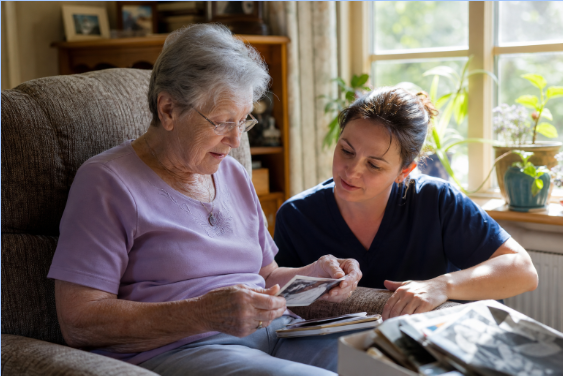
Activities are most valuable when they connect with the person’s own history, interests, skills, and preferences. Someone who enjoys gardening may like watering potted plants. A former homemaker may take satisfaction in folding towels or setting the table. Other options include sorting photographs, listening to familiar songs, painting, singing, watching a favorite sport, or taking a supported walk.
Participation matters more than completing a task perfectly. Caregivers can offer a simple starting point, break an activity into smaller steps, and stay nearby for encouragement. Guidance on adapting activities to current abilities emphasizes matching the activity to what the person can do, watching for frustration, and allowing someone to observe if that is more enjoyable.
Keeping a Routine Flexible
Energy, sleep, pain, appetite, and mood can vary from one day to the next. A task that goes well in the morning may be difficult later in the day. When possible, schedule more demanding activities at the time when the person is usually most alert, and offer only two simple choices instead of a long list of options.
If frustration rises, pause rather than pushing through. Consider whether the activity is too complex, too noisy, poorly timed, or connected to hunger, fatigue, or discomfort. A calm adjustment can protect dignity and prevent a routine from becoming more important than the individual.
Person-Centered Support Should Guide the Plan
Person-centered support means shaping care around the individual’s life, not just the diagnosis. A useful plan includes preferred foods, sleep habits, past work or hobbies, favorite music, communication style, cultural traditions, and calming strategies. It also recognizes what the person can still do independently.
Rather than taking over every task, caregivers can provide the amount of help needed for success. This may mean laying out clothing in order, offering one verbal prompt at a time, handing over a toothbrush, or allowing extra time to finish a familiar chore. These small opportunities for participation can help maintain a connection to daily life.
How Families Can Build a Helpful Daily Plan
- List familiar habits. Note regular routines, favorite activities, foods, music, and calming comforts.
- Identify difficult times. Record when fatigue, confusion, restlessness, or sleep problems tend to appear.
- Choose daily anchors. Build around dependable events such as breakfast, lunch, a walk, or evening music.
- Add meaningful tasks. Select activities that align with the person’s interests and current abilities.
- Make the space easier to read. Improve lighting, reduce clutter, and use helpful labels or visual cues.
- Track what works. Share successful approaches with relatives, caregivers, and health professionals.
Common Questions Families May Have
Does every person with dementia need the same routine?
No. A helpful routine reflects the individual’s habits, health needs, abilities, and preferences. Two people with the same diagnosis may respond differently to the same schedule.
Can familiar objects still help with advanced memory loss?
They may. A person may respond positively to familiar music, textures, photographs, voices, or comforting objects even if they cannot explain the connection.
When should a family seek additional support?
Additional guidance may be needed when wandering, falls, medication concerns, poor nutrition, sleep disruption, increasing care needs, or caregiver exhaustion become difficult to manage safely.
Create a Day That Feels Recognizable
Supportive dementia care often begins with ordinary moments: a familiar breakfast, a clear path through the room, a favorite song, or a chance to help with a simple task. For Visalia families, a steady routine, purposeful surroundings, and respectful assistance can help create days that feel safer, calmer, and more connected. The best plan is not the busiest one. It is the one that helps the person feel known, involved, and understood.
