

Table Of Contents
- Why Water Damage Needs Fast Action
- Common Sources Of Water Damage
- A Simple Prevention Checklist
- What To Do During The First Hour
- What To Do During The First 24 Hours
- How To Document The Damage
- Safe Cleanup And Drying Steps
- How To Reduce Mold Risk
- Questions To Ask About Home Coverage
- When To Call A Professional
- A Seasonal Water-Damage Plan
- Final Takeaway
Does homeowners insurance cover water damage? In many cases, coverage depends on what caused the damage and whether it was sudden or the result of a long-term maintenance issue. A dripping supply line, clogged drain, or roof leak can soak materials beyond the visible wet spot, affecting flooring, drywall, cabinets, insulation, and belongings. Understanding what homeowner’s insurance covers for water damage can help you prepare for the financial questions that often follow an emergency.
The best approach is simple: prevent avoidable leaks, act quickly when water appears, document what happened, and bring in qualified help when the situation is unsafe or likely to involve hidden moisture. A calm plan makes an unpleasant event far easier to manage.
Why Water Damage Needs Fast Action
Water moves through cracks, seams, and absorbent materials quickly. What looks like a small puddle near a dishwasher may have already reached the subfloor, baseboards, or cabinets. A slow leak that runs over a weekend can warp flooring, stain ceilings below, loosen drywall, and create odors that are harder to remove later. Fast action limits the amount of material that must be repaired or replaced.
Common Sources Of Water Damage
Most household water damage starts with ordinary systems that deserve routine attention. Check supply lines beneath sinks and toilets, washing machine hoses, dishwasher connections, refrigerator water lines, water heaters, and air conditioner drain pans. Outside, clogged gutters, short downspouts, damaged roof flashing, basement seepage, poor yard drainage, frozen pipes, and failed sump pumps can all direct water where it does not belong.
A Simple Prevention Checklist
- Find, test, and label the main water shutoff valve so every adult in the household knows where it is.
- Inspect visible pipes, valves, and appliance hoses for rust, moisture, cracking, or mineral buildup.
- Replace worn washing machine hoses and check water heater connections for pooling or corrosion.
- Test the sump pump, clean its intake screen, and consider a backup power option where outages are common.
- Clear gutters and downspouts, then make sure water drains away from the foundation.
- Look for ceiling stains, soft flooring, bubbling paint, musty odors, and damp spots under cabinets.
- Keep basement storage elevated and place leak alarms near appliances, toilets, and water heaters.
What To Do During The First Hour
Safety comes before cleanup. If you can reach the source without entering water or creating an electrical hazard, close the fixture valve or shut off the main water supply. Move people and pets away from the area, and call a plumber if the leak is hidden, severe, or cannot be stopped.
- Do not enter standing water near outlets, appliances, electrical panels, or a sagging ceiling.
- Shut off electricity to affected areas only when the electrical panel can be reached safely.
- Move dry belongings, rugs, and furniture away from the spreading water.
- Place containers under active drips and use towels or barriers to limit spread when safe.
- Take wide photos of each room, followed by close-ups of the source and damaged items.
What To Do During The First 24 Hours
Within The First Few Hours
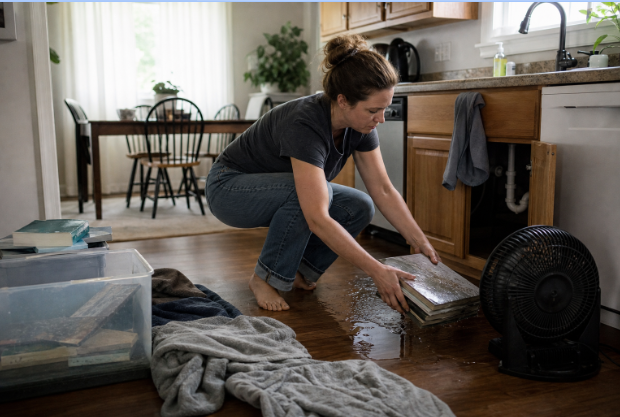
Remove standing clean water only if conditions are safe. Open interior doors, cabinet doors, and closets to improve airflow. Separate wet items from dry items, and avoid stacking damp belongings together. Fans and dehumidifiers can help after electrical safety has been confirmed.
Before The Day Ends
Contact the appropriate repair, plumbing, or restoration professional. Keep damaged materials until they have been photographed and discussed with the relevant parties, unless they present a health or safety concern. Record when the issue began, what you observed, whom you called, and each action taken.
How To Document The Damage
Good records make repair decisions and coverage conversations more organized. Photograph every affected room from several angles before the cleanup changes the scene. Capture wet floors, walls, ceilings, furniture, and personal property. Write down model and serial numbers for appliances when available, create an itemized list of damaged or discarded belongings, and save receipts for emergency supplies, temporary repairs, hotel stays, inspections, and contractor estimates. Keep claim numbers, emails, and notes from phone calls in one folder.
Safe Cleanup And Drying Steps
Small clean-water incidents may be manageable with gloves, protective footwear, eye protection, prompt drying, and careful cleaning. Do not mix bleach with ammonia or other cleaners. Keep children and pets away from wet areas, and ask a professional to inspect insulation, HVAC components, wall cavities, or flooring that may hold hidden water.
Sewage, floodwater, chemical-contaminated water, and large losses require more caution than a clean appliance leak. After a natural flood, homeowners should follow guidance from trusted sources about preparing for floods alongside local emergency instructions, since contaminated water and structural damage can change the cleanup process.
How To Reduce Mold Risk
Moisture control is the goal. Dry surfaces promptly and check less-visible areas behind baseboards, under cabinets, beneath flooring, and around plumbing penetrations. Watch for recurring dampness, discoloration, peeling paint, soft materials, or musty odors. A moisture meter can help identify a concealed issue, but widespread or repeated growth calls for a qualified remediation professional. Maintaining reasonable indoor humidity and repairing the water source are more important than simply covering stains.
Questions To Ask About Home Coverage
Coverage depends on policy language, cause of loss, maintenance history, deductibles, endorsements, and local requirements. Ask whether sudden accidental discharge is handled differently from gradual leaks, whether outside flooding requires separate protection, whether temporary living expenses may apply after a covered loss, and whether mold-related limits or special conditions appear in the policy. Request clear guidance on the records needed after an incident, but avoid assuming a claim outcome before the policy and facts are reviewed.
When To Call A Professional
Bring in trained help when water reaches electrical equipment, comes from inside a wall or ceiling, involves sewage or floodwater, or causes a ceiling to sag. Professional assessment is also wise when wet drywall, insulation, cabinets, or flooring cover a large area; a musty odor remains after drying; or people in the home experience breathing problems after exposure. Saving money on a quick fix is not worth overlooking hidden damage or a safety risk.
A Seasonal Water-Damage Plan
Spring
Inspect the roof, gutters, downspouts, foundation, and sump pump before heavy rain arrives. Look for winter pipe damage and signs of basement seepage.
Summer
Check air conditioner drain lines, pans, outdoor faucets, irrigation connections, and appliance supply lines. Review the shutoff plan before traveling.
Fall And Winter
Clear leaves from gutters, protect outdoor plumbing before freezing temperatures, inspect hoses and appliance connections, and keep indoor heat at a safe level while away. During extreme cold, protect exposed pipes and know exactly how to stop the water if one bursts.
Final Takeaway
Water damage is stressful, but preparation reduces confusion. Inspect common trouble spots, keep a shutoff and documentation plan, respond quickly to new moisture, and call qualified professionals whenever safety, contamination, or hidden water is involved. Small habits today can prevent a much larger repair tomorrow.
