

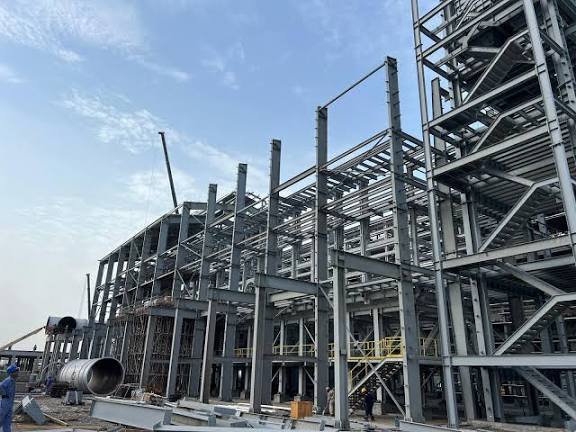
Introduction
The construction industry is experiencing a significant transformation as architects, engineers, developers, and contractors respond to changing demands for efficiency, sustainability, safety, and adaptability. Buildings are no longer designed simply to provide shelter or functional space. Modern projects increasingly need to perform efficiently, reduce environmental impact, accommodate changing technologies, and provide long-term value to their occupants. This shift has encouraged professionals to explore new materials, digital planning methods, structural concepts, and construction technologies. In this evolving environment, structurespy com represents a useful point of discussion for understanding how structural thinking and modern building practices can connect with the broader direction of the industry.
Modern building solutions are being influenced by several factors at the same time. Population growth, urban development, climate concerns, rising construction costs, labor shortages, and increasing expectations for energy efficiency are encouraging the industry to reconsider traditional approaches. Digital modeling, prefabrication, advanced structural analysis, sustainable materials, and automated construction processes are becoming increasingly important. Instead of treating design, engineering, and construction as separate stages, modern approaches encourage greater coordination between them. This integrated way of working can reduce errors, improve project planning, and create buildings that are better prepared for future requirements.
The development of these solutions is not limited to large commercial towers or technologically advanced facilities. Residential buildings, educational institutions, industrial structures, healthcare facilities, and infrastructure projects are also benefiting from new approaches. As technology becomes more accessible, smaller projects can adopt tools and ideas that were once limited to major developments. Understanding these changes provides valuable insight into where the built environment is heading and why innovation has become an essential part of contemporary construction.
The Changing Nature of Modern Building Design
Building design has gradually moved from conventional drafting toward highly coordinated digital workflows. Architects and engineers can now create detailed digital representations of buildings before physical construction begins. These models can contain information about structural components, materials, dimensions, systems, and potential conflicts. Such capabilities allow project teams to evaluate different options earlier and make informed decisions before costly construction work takes place.
The importance of coordinated design has increased because modern buildings are becoming more complex. A single project may involve structural engineering, electrical systems, plumbing, ventilation, energy management, fire safety, smart-building technology, and specialized materials. When these elements are planned independently, conflicts can appear during construction. Digital coordination allows teams to identify many of these problems before work reaches the site. This can reduce rework, improve scheduling, and support more predictable project outcomes.
The development discussed through structurespy com can also be viewed within this wider movement toward better-informed structural decisions. Modern structural solutions increasingly depend on accurate analysis, digital simulation, and an understanding of how materials behave under different conditions. Rather than relying solely on traditional assumptions, engineers can compare multiple design alternatives and assess their potential performance. This creates opportunities for structures that use resources more efficiently while still meeting safety and performance requirements.
The Growing Role of Digital Construction Technology
Digital technology has become one of the strongest influences on contemporary construction. Building Information Modeling, cloud-based collaboration platforms, 3D visualization, drone surveying, laser scanning, digital twins, and artificial intelligence are changing how information moves throughout a project. These technologies can help teams collect accurate site information, coordinate designs, monitor progress, and identify potential problems.
Artificial intelligence is another emerging area with potential applications across the construction lifecycle. AI-assisted systems can analyze large amounts of project information, identify patterns, support scheduling decisions, and assist with risk assessment. Although human expertise remains essential, intelligent software can help professionals process information more quickly. For example, project teams may use data-driven systems to identify schedule risks or compare design alternatives based on defined performance criteria.
Digital twins are also attracting attention because they can connect a digital representation of a building with information from the physical asset. Sensors and monitoring systems can provide data about temperature, energy consumption, equipment performance, or structural conditions. Over time, this information can help facility managers make better maintenance decisions. The concept demonstrates how modern construction is increasingly extending beyond the moment a building is completed.
Sustainable Materials and Resource-Efficient Construction
Sustainability has become a central consideration in building development. The industry is under increasing pressure to reduce waste, lower carbon emissions, use resources responsibly, and improve the operational efficiency of buildings. These objectives are encouraging the adoption of recycled materials, low-carbon concrete alternatives, responsibly sourced timber, energy-efficient systems, and construction techniques that minimize material waste.
Material selection can have a major effect on the environmental performance of a building. Engineers and architects are increasingly considering not only the initial cost of a material but also its durability, maintenance requirements, recyclability, transportation impact, and expected lifespan. A material that lasts longer and requires less maintenance may provide greater value over the entire life of a structure even when its initial price is higher.
The ideas associated with structurespy com fit naturally into this broader discussion because structural efficiency and sustainability are closely connected. Efficient structural design can reduce unnecessary material consumption without compromising safety. For instance, accurate load calculations and optimized member dimensions can help prevent excessive use of concrete or steel. When these decisions are combined with sustainable material choices, the result can be a building solution that balances structural performance with environmental responsibility.
Why Sustainable Construction Is Becoming More Practical
Sustainable construction is increasingly becoming a practical business consideration rather than simply an environmental objective. Energy-efficient buildings can reduce operational expenses, while durable materials can lower future maintenance requirements. Governments, investors, occupants, and businesses are also placing greater emphasis on environmental performance.
Several areas are receiving particular attention:
- Low-carbon and recycled construction materials.
- Energy-efficient building envelopes and mechanical systems.
- Prefabricated components designed to reduce construction waste.
- Designs that support future reuse, modification, or recycling.
These approaches demonstrate that sustainability can be incorporated into practical design decisions rather than treated as an additional feature added at the end of a project.
Prefabrication and Modular Building Solutions
Prefabrication is another important development in modern construction. Instead of producing every component directly on the construction site, manufacturers can fabricate selected elements in controlled factory environments. These components can then be transported to the project location and assembled according to the design.
Factory-controlled production can provide several advantages. Components can be manufactured with consistent processes, while construction teams can perform certain activities simultaneously rather than waiting for one stage to finish before beginning another. This can potentially shorten project schedules and reduce material waste. Modular construction can also be particularly valuable for projects where speed and repeatability are important.
The growth of modular construction is supported by improved digital design tools. Precise digital models can help manufacturers understand component dimensions and connection requirements before production begins. This reduces uncertainty and creates stronger connections between design and manufacturing. As these technologies continue to develop, prefabrication may become increasingly common across residential, commercial, healthcare, educational, and industrial construction.
Smart Structural Engineering and Performance
Structural engineering is moving toward increasingly performance-oriented design. Instead of focusing only on whether a building meets minimum requirements, engineers can evaluate how structures are expected to behave under different scenarios. Wind, earthquakes, vibration, temperature changes, material deterioration, and unusual loading conditions can all be considered during the design process.
Advanced computational tools make it possible to analyze complex structures more efficiently. Engineers can model structural behavior, test alternatives, and evaluate potential weaknesses before construction. This is particularly valuable for high-rise buildings, bridges, industrial facilities, and structures located in challenging environments.
Structurespy com can be understood within this wider context of structural innovation, where technical knowledge is increasingly combined with digital analysis and practical construction experience. Modern structural engineering is not simply about creating strong buildings; it is about achieving an appropriate balance between strength, efficiency, flexibility, cost, constructability, and long-term performance.
Comparing Traditional and Modern Building Approaches
The difference between traditional and modern construction is not necessarily that one is completely replaced by the other. Many proven construction principles remain essential. Instead, modern solutions often enhance established practices through technology, better information, improved materials, and more integrated project management.
| Building Aspect | Traditional Approach | Modern Approach |
|---|---|---|
| Design | Primarily drawing-based | Digital modeling and coordinated workflows |
| Materials | Conventional material selection | Performance and lifecycle-based selection |
| Construction | Mostly site-based activities | Greater use of prefabrication and modular systems |
| Analysis | Standard calculations | Advanced simulation and performance analysis |
| Project Management | Stage-by-stage coordination | Integrated digital collaboration |
| Sustainability | Often secondary consideration | Considered throughout the project lifecycle |
| Maintenance | Reactive approaches | Increasing use of monitoring and predictive strategies |
This comparison highlights how the industry is becoming more integrated. A modern building project may combine conventional craftsmanship with advanced software, prefabricated components, automated equipment, and data-driven decision-making. The goal is not to remove human expertise but to give professionals better tools for applying that expertise.
Resilience and Future-Ready Buildings
Climate-related risks and changing environmental conditions are increasing the importance of resilient construction. Buildings may need to withstand stronger weather events, temperature fluctuations, flooding, seismic activity, or other regional risks. Designing for resilience means considering not only how a structure performs under normal conditions but also how it responds when conditions become more demanding.
Future-ready buildings also need flexibility. A commercial space may eventually need to accommodate different technologies, layouts, tenants, or energy systems. Residential buildings may require adaptable spaces as household needs change. Designing with future modifications in mind can extend the useful life of a building and reduce the need for major reconstruction.
This principle is increasingly relevant to the structural concepts explored through structurespy com, particularly because adaptable construction requires engineers to think beyond the immediate purpose of a building. Connection systems, structural grids, floor heights, service spaces, and material choices can all influence how easily a building can be modified later.
The Importance of Collaboration in Modern Construction
Technology alone cannot solve every construction challenge. Successful building projects depend on communication between architects, structural engineers, contractors, suppliers, project managers, manufacturers, and building owners. When these participants work from disconnected information, misunderstandings can create delays and additional costs.
Modern collaborative platforms are helping project teams work from shared information. Changes can be communicated more quickly, and participants can review designs without relying entirely on physical documents. This is particularly important for complex projects involving teams located in different offices or regions.
The modern construction professional therefore needs a combination of technical knowledge and communication skills. Understanding software is valuable, but knowing how to interpret information, identify practical limitations, communicate risks, and make responsible decisions remains equally important.
Cost Efficiency and Long-Term Value
Construction cost remains one of the most important considerations for developers and building owners. However, focusing only on the initial construction price can lead to poor long-term decisions. A cheaper material or system may require more maintenance, consume more energy, or have a shorter service life.
Modern building solutions increasingly consider lifecycle value. Designers can compare initial costs with expected operating expenses, maintenance requirements, durability, and potential future modifications. This approach can produce buildings that provide greater value over several decades rather than simply achieving the lowest possible construction price.
Structurespy com provides a useful conceptual connection to this shift because structural efficiency can influence both construction and lifecycle costs. Optimized structural systems may reduce material requirements, simplify construction, and improve long-term performance. When structural decisions are made alongside architectural, environmental, and economic considerations, the overall project can become more efficient.
Emerging Trends Shaping the Construction Industry
The next phase of building development is likely to involve greater integration between physical construction and digital technology. Robotics, artificial intelligence, automated surveying, advanced materials, sensor-based monitoring, and digital twins are already influencing parts of the industry. Their adoption will depend on cost, workforce capabilities, regulations, reliability, and the specific needs of each project.
One particularly important trend is the increasing availability of project data. Construction companies can collect information about productivity, material usage, equipment performance, safety incidents, and project schedules. When this data is analyzed effectively, it can help organizations identify inefficiencies and improve future projects.
Another trend is the growing emphasis on circular construction. Instead of viewing a building as a structure that will eventually become waste, designers are increasingly considering how components can be reused, repaired, or recycled. This approach could influence material selection, connection methods, and building design for years to come.
How Modern Building Solutions Benefit Communities
The impact of construction innovation extends beyond individual projects. Efficient buildings can reduce energy demand, resilient structures can provide greater protection during extreme events, and thoughtfully designed public spaces can improve quality of life. Better construction methods can also support faster delivery of housing, schools, healthcare facilities, and essential infrastructure.
Modern building solutions may also create economic opportunities by encouraging new manufacturing processes, specialized engineering services, digital construction roles, and technology development. As the construction sector becomes more technology-driven, professionals with expertise in both traditional construction and emerging digital systems are likely to become increasingly valuable.
From this perspective, structurespy com can be associated with the broader conversation surrounding how engineering knowledge, technology, and practical construction methods are combining to address modern building challenges.
FAQs
What are modern building solutions?
Modern building solutions are construction approaches that use improved materials, digital technologies, efficient structural systems, prefabrication, sustainable practices, and advanced project coordination. Their purpose is to improve building performance, construction efficiency, durability, safety, and environmental outcomes.
Why is digital technology important in modern construction?
Digital technology helps professionals visualize designs, coordinate building systems, identify potential conflicts, analyze structural performance, manage project information, and monitor construction progress. It can improve decision-making while reducing errors and unnecessary rework.
How does sustainability influence structural design?
Sustainability influences structural design by encouraging efficient use of materials, longer-lasting components, reduced construction waste, and consideration of a building’s full lifecycle. Engineers can optimize structural systems so that required performance is achieved without unnecessary resource consumption.
What role does prefabrication play in modern construction?
Prefabrication allows certain building components to be manufactured in controlled environments before being transported to the construction site. It can improve consistency, reduce waste, support faster installation, and make project schedules more predictable when properly planned.
How can buildings become more future-ready?
Buildings can become more future-ready through adaptable layouts, durable materials, flexible structural systems, accessible service spaces, energy-efficient technologies, and designs that allow future modifications. Planning for change can extend a building’s useful life and reduce costly renovations.
Why is structural optimization important?
Structural optimization helps engineers balance strength, safety, material consumption, cost, constructability, and long-term performance. By analyzing different structural alternatives, professionals can identify solutions that meet project requirements more efficiently.
Conclusion
The development of modern building solutions reflects a fundamental change in how the construction industry approaches design, engineering, materials, technology, and long-term performance. Buildings are increasingly expected to be efficient, resilient, adaptable, sustainable, and capable of supporting changing user requirements. Digital modeling, advanced analysis, prefabrication, smart monitoring, sustainable materials, and collaborative workflows are helping professionals meet these expectations.
The ideas connected with structurespy com fit into this broader transformation by highlighting the importance of structural thinking within an increasingly technology-driven construction environment. The strongest modern solutions are not based on one technology or material alone. Instead, they result from combining engineering knowledge, practical experience, digital capabilities, environmental awareness, and careful project planning.
As construction continues to evolve, successful building solutions will depend on the industry’s ability to adopt innovation without losing sight of fundamental principles such as safety, durability, functionality, and responsible design. The future of construction will likely belong to approaches that combine proven engineering practices with emerging technologies, creating structures that are not only efficient to build but also valuable, adaptable, and resilient throughout their entire lifecycle.
