

Introduction
Structural engineering is entering a period of significant transformation. The industry is moving beyond conventional calculations and drawing-based workflows toward digitally connected processes that combine engineering knowledge, advanced software, data analysis, automation, and sustainable design principles. As buildings and infrastructure become more complex, engineers need better ways to evaluate structural performance, coordinate projects, manage information, and respond to changing environmental and construction requirements. In this evolving environment, structurespy com represents a useful concept for exploring how technology and structural engineering can increasingly work together.
Modern structural projects are expected to achieve more than basic strength and stability. Engineers must consider material efficiency, construction schedules, environmental impact, resilience, maintenance, safety, and long-term performance. Digital modeling allows teams to examine these factors earlier in the design process, while computational tools can help engineers compare alternatives and identify potential problems before construction begins. These developments are changing the role of structural engineers from primarily calculation-focused professionals into broader technical decision-makers who work across design, technology, construction, and asset management.
The future of structural engineering will therefore depend on how effectively professionals combine established engineering principles with emerging digital capabilities. Structurespy com can be viewed in this context as a topic connected with the broader movement toward technology-supported structural analysis, construction intelligence, and modern engineering practices. Understanding these changes can help students, professionals, designers, and construction organizations prepare for the next generation of structural projects.
The Changing Landscape of Structural Engineering
Traditional structural engineering has always relied on principles such as mechanics, material behavior, load paths, stability, and structural analysis. Those fundamentals remain essential, but the tools used to apply them are changing rapidly. Engineers now have access to sophisticated modeling platforms, computational analysis, cloud-based collaboration, digital twins, automated documentation, and increasingly capable artificial intelligence systems. These technologies can process large amounts of project information and provide engineers with additional ways to understand structural behavior.
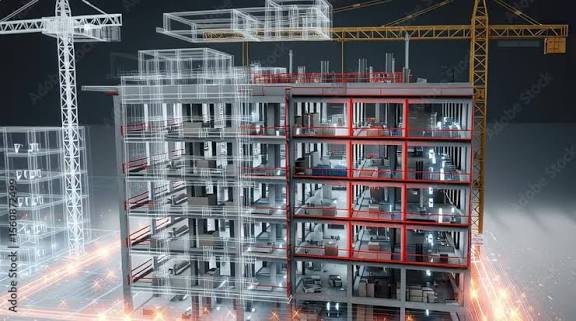
The transition is especially visible in large commercial buildings, bridges, industrial facilities, transportation infrastructure, and complex renovation projects. A structural model can contain information about geometry, materials, connections, loads, and construction elements, allowing different teams to coordinate their work more efficiently. Instead of treating drawings, calculations, and project schedules as isolated information, modern workflows increasingly connect them into a broader digital environment.
This does not mean that technology replaces engineering judgment. Structural safety still depends on appropriate assumptions, accurate inputs, applicable standards, quality control, and professional responsibility. Digital tools can make calculations and coordination faster, but an engineer must understand whether the output is reasonable. This distinction will become even more important as automated technologies become more common.
How Digital Design Is Transforming Engineering
Building Information Modeling and Integrated Workflows
Building Information Modeling has become an important part of modern construction and design coordination. A detailed digital model can provide a shared representation of a project and allow architects, structural engineers, mechanical teams, contractors, and other specialists to identify conflicts earlier. For structural engineers, this can improve coordination between beams, columns, slabs, foundations, reinforcement, and other building systems.
The value of integrated modeling extends beyond visualization. When information is structured properly, teams can use the same project data throughout design, construction, and later facility management. Changes to structural components can be evaluated more systematically, while coordination issues may be discovered before they create expensive site problems. This approach supports the industry’s broader shift from document-centered work toward information-centered project delivery.
Computational Design and Parametric Modeling
Computational design is another important development. Instead of manually creating every variation of a structural system, engineers can establish parameters that allow software to generate and evaluate multiple alternatives. For example, a designer might vary column spacing, structural depth, material properties, or loading assumptions and then compare the resulting designs.
Parametric workflows can be particularly valuable for complex structures where conventional trial-and-error design would require considerable time. Engineers can investigate different geometries while considering structural efficiency, material quantities, architectural requirements, and constructability. Structurespy com fits naturally into discussions about this broader movement because the future of structural engineering increasingly involves combining engineering expertise with computational thinking.
Artificial Intelligence and Automation in Structural Engineering
Artificial intelligence is becoming an increasingly discussed technology across the construction and engineering sectors. Its potential applications include pattern recognition, design optimization, document analysis, anomaly detection, project forecasting, and assistance with repetitive technical tasks. In structural engineering, AI could help identify patterns within large datasets or support engineers when comparing design alternatives.
However, AI should not be treated as an independent authority for safety-critical decisions. Structural engineering involves consequences that require professional oversight. An algorithm may identify an unusual result, but an engineer must determine why that result occurred and whether the underlying assumptions are appropriate. Poor-quality input data can also produce unreliable outputs, making verification an essential part of any AI-assisted workflow.
Automation is likely to have a more immediate effect on repetitive tasks. Generating schedules, organizing project information, checking certain model conditions, and preparing preliminary comparisons are examples of activities that may increasingly be supported by automated systems. This can allow engineers to spend more time on conceptual design, problem-solving, coordination, and technical judgment.
A practical future workflow may combine human expertise with automated assistance rather than replacing one with the other. Structurespy com can therefore be considered within a technology-focused perspective where digital tools support engineers while responsibility remains with qualified professionals.
Advanced Materials and Sustainable Structural Design
Sustainability has become an increasingly important consideration in structural engineering. Buildings and infrastructure consume significant quantities of materials, energy, and resources throughout their life cycles. Structural engineers can contribute to sustainability by improving material efficiency, considering durability, reducing unnecessary quantities, and evaluating alternative structural systems.
Materials such as high-performance concrete, engineered timber, recycled steel, and fiber-reinforced composites are receiving attention for different applications. Each material has its own advantages, limitations, environmental considerations, cost implications, and design requirements. The most appropriate solution depends on the project rather than simply choosing the newest available material.
Another important development is life-cycle thinking. A structure should not necessarily be judged only by the material quantity used during initial construction. Durability, maintenance, replacement requirements, operational conditions, adaptability, and eventual reuse can all influence environmental performance. Structural engineers increasingly need to understand these factors when making design decisions.
Modern sustainable structural design may involve several considerations:
- Efficient use of structural materials and resources.
- Long-term durability and maintenance requirements.
- Adaptability and potential reuse of existing structures.
- Evaluation of embodied environmental impacts.
This broader approach means that structural efficiency and sustainability are becoming increasingly connected. A well-designed structure can potentially reduce material waste while also providing appropriate performance over a long service life.
The Growing Importance of Structural Resilience
Climate-related hazards, extreme weather, aging infrastructure, and changing urban conditions are increasing attention toward structural resilience. Engineers are increasingly required to think about how structures behave not only under normal conditions but also when exposed to unusual or extreme events.
Resilience can involve resistance to hazards such as earthquakes, flooding, wind events, fire, or other site-specific risks. It also involves considering how quickly a facility can recover after an incident. For critical infrastructure, continued functionality can be particularly important because hospitals, transportation systems, emergency facilities, and utilities may need to remain operational during difficult conditions.
The concept of resilience encourages engineers to think beyond minimum design requirements. A structure may satisfy a particular code requirement while still having different levels of vulnerability depending on its materials, configuration, redundancy, location, and maintenance condition. Digital analysis and monitoring technologies can support more informed resilience strategies.
Digital Twins and Structural Health Monitoring
One of the most promising developments in structural engineering is the combination of digital models with real-world monitoring. A digital twin can provide a digital representation of a physical asset and potentially incorporate information collected during its operation.
Sensors can monitor variables such as vibration, strain, temperature, displacement, or other structural conditions depending on the application. When properly designed and interpreted, monitoring systems can help engineers understand how structures behave over time. This can support maintenance planning and help identify changes that require further investigation.
For bridges and other major infrastructure, structural health monitoring can be particularly valuable because inspection and maintenance decisions have long-term implications. Instead of relying exclusively on periodic inspections, engineers can combine inspection findings with continuously or periodically collected data.
The technology still requires careful implementation. Sensor reliability, data quality, calibration, interpretation, cybersecurity, and maintenance all matter. A large amount of data is not automatically useful unless engineers have a clear process for turning that information into meaningful decisions.
The Role of Automation in Construction
The future of structural engineering is closely connected to developments on construction sites. Robotics, automated equipment, prefabrication, modular construction, digital surveying, and advanced fabrication techniques are changing how some structures are produced.
Designers increasingly need to consider constructability earlier in the process. A structurally efficient design may not be practical if it is difficult to fabricate, transport, assemble, or inspect. Digital coordination can help engineering and construction teams understand these constraints before work begins.
Prefabrication is another example. Structural components manufactured in controlled environments can potentially improve consistency and reduce certain site activities. However, transportation dimensions, lifting requirements, connection design, tolerances, and sequencing must all be considered. This demonstrates why future structural engineering will increasingly require collaboration between design and construction professionals.
Comparing Traditional and Emerging Structural Workflows
| Engineering Aspect | Traditional Approach | Emerging Approach |
|---|---|---|
| Design development | Primarily drawing and calculation focused | Integrated digital modeling |
| Structural analysis | Engineer-led software analysis | Analysis combined with computational optimization |
| Coordination | Meetings and drawing reviews | Shared digital models and automated checks |
| Construction planning | Often separated from early design | Greater design-construction integration |
| Monitoring | Periodic inspections | Increasing use of sensors and digital monitoring |
| Sustainability | Considered within selected design decisions | Increasingly integrated across the project life cycle |
The table illustrates a broad industry transition rather than a complete replacement of established engineering methods. Traditional calculations, drawings, inspections, and professional reviews remain important. Emerging tools are increasingly being added to these processes to improve coordination, analysis, documentation, and decision-making.
Skills Engineers Will Need in the Future
Structural engineers entering the profession will need a combination of traditional technical knowledge and digital capabilities. Understanding structural mechanics, materials, codes, analysis methods, and construction remains fundamental. At the same time, familiarity with modeling platforms, data workflows, computational methods, and digital collaboration can provide additional value.
Communication will also become increasingly important. Engineers frequently work with architects, contractors, owners, surveyors, fabricators, environmental specialists, and technology teams. Being able to explain technical decisions clearly can be just as important as performing a calculation.
Structurespy com can be connected with this wider discussion because the modern engineering professional increasingly operates at the intersection of structural knowledge and digital technology. The strongest future workflows are likely to be those where engineers understand both the principles behind a structural decision and the technology used to support it.
Why Existing Structures Matter More
New construction receives considerable attention, but the existing building stock may represent one of the most important areas for future structural engineering. Many cities contain buildings, bridges, and infrastructure that require inspection, strengthening, adaptation, or renovation.
Adaptive reuse can sometimes extend the useful life of existing structures while reducing the need for entirely new construction. Engineers may need to assess historical materials, changes in loading, deterioration, previous modifications, and new functional requirements. Digital scanning and modeling can help create better representations of existing conditions.
This work can be technically challenging because existing structures rarely match perfectly with original drawings. Engineers must combine documentation, site observations, testing, and analysis to understand actual conditions. As sustainability and resource efficiency receive greater attention, structural assessment and rehabilitation are likely to remain important areas of professional practice.
Education and the Next Generation of Engineers
Engineering education is also changing as technology becomes more integrated into professional workflows. Students can benefit from learning structural theory alongside practical software applications and digital modeling. However, understanding software commands is not enough. Future engineers need to understand why a model produces a particular result and whether that result makes physical sense.
Universities and professional training programs may increasingly emphasize interdisciplinary learning. Students could work on projects involving structural engineering, architecture, construction management, sustainability, programming, and data analysis. Such experiences can better reflect the collaborative environment of modern projects.
The central principle remains unchanged: technology should strengthen engineering judgment rather than replace it. Structurespy com represents an opportunity to discuss this relationship between structural knowledge and digital innovation while recognizing the continuing importance of fundamental engineering principles.
Challenges Facing the Future of Structural Engineering
Technology creates opportunities, but it also introduces challenges. Data security, software interoperability, training requirements, model accuracy, licensing, professional liability, and dependence on proprietary platforms are all important considerations. Organizations need appropriate processes to ensure that digital information remains reliable throughout a project’s life cycle.
Another challenge is the digital skills gap. Not every engineering organization has the same access to advanced software, training, computing resources, or specialist staff. Smaller firms may need to adopt technologies gradually while maintaining productivity and quality. Successful digital transformation therefore depends not only on purchasing software but also on developing appropriate workflows and employee capabilities.
Professional standards will also need to evolve alongside technology. As automated tools become more sophisticated, questions about validation, accountability, documentation, and professional responsibility become increasingly relevant. Engineers will need clear processes for checking automated outputs and recording the reasoning behind important design decisions.
Frequently Asked Questions
What is the future of structural engineering?
The future of structural engineering is likely to involve greater integration of digital modeling, computational analysis, automation, advanced materials, sustainability, monitoring technologies, and data-driven decision-making. Traditional engineering fundamentals will continue to provide the foundation for these developments.
How can artificial intelligence help structural engineers?
Artificial intelligence can assist with repetitive analysis, pattern recognition, document processing, optimization, and data interpretation. Its role should generally complement professional engineering judgment, particularly when decisions involve structural safety and compliance.
Why is sustainability important in structural engineering?
Structural systems require substantial quantities of materials and can remain in service for decades. Engineers can influence environmental performance through efficient design, durable materials, adaptive reuse, reduced waste, and consideration of life-cycle impacts.
What is a digital twin in structural engineering?
A digital twin is a digital representation of a physical asset that can potentially incorporate information about the asset’s condition and performance. In structural applications, it may be connected with monitoring data to support inspection, analysis, and maintenance decisions.
Will automation replace structural engineers?
Automation is more likely to change the nature of many engineering tasks than eliminate the need for structural engineers entirely. Repetitive activities may become increasingly automated, while professional judgment, responsibility, communication, conceptual design, and complex problem-solving remain important.
Why is structural health monitoring becoming important?
Structural health monitoring can provide information about how infrastructure behaves over time. When combined with appropriate inspections and engineering analysis, monitoring data can support maintenance planning, condition assessment, and better understanding of structural performance.
Conclusion
Structural engineering is moving toward a more connected, digital, sustainable, and data-informed future. Advanced modeling, computational design, artificial intelligence, automation, structural health monitoring, digital twins, and innovative materials are creating new possibilities for how structures are designed, constructed, operated, and maintained. Yet these developments do not eliminate the need for fundamental engineering knowledge. Instead, they increase the importance of professionals who can combine technical understanding with responsible use of technology.
The future will likely be defined by collaboration between engineers, digital systems, construction professionals, material specialists, and asset owners. Organizations that develop reliable workflows and invest in appropriate skills can use emerging technologies to improve coordination and support better-informed decisions. Structurespy com provides a useful thematic lens for understanding this transition and the relationship between structural engineering and modern digital innovation.
Ultimately, the strongest structural engineering practices will remain centered on safety, reliability, efficiency, durability, and responsible design. Technology can expand what engineers are able to analyze and manage, but human expertise remains essential for interpreting information and making sound professional decisions. As the industry continues to evolve, the combination of engineering fundamentals and carefully applied digital tools will shape the structures of the future.
