

Key Takeaways
- Glass double doors can make an entry feel brighter, wider, and more welcoming.
- Glass choice affects privacy, glare, comfort, and the amount of daylight indoors.
- Material, weather sealing, hardware, and installation matter as much as appearance.
- Accurate measurements and a clear swing path prevent costly fit and operation problems.
Table Of Contents
- Introduction
- Why Double Doors Work Well In Entryways
- Start With The Space, Not The Style
- Choose Glass For Light And Privacy
- Compare Common Door Materials
- Check Comfort And Energy Performance
- Plan For Safety And Security
- Measure The Opening Carefully
- Coordinate The Door With The Home
- Prepare For A Smooth Installation
- Common Questions
- Final Thoughts
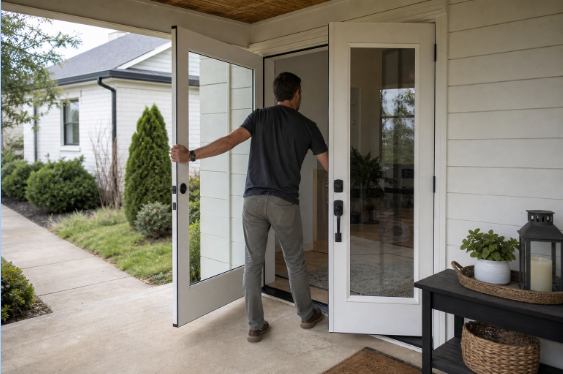
Glass double doors can turn an ordinary entrance into a lighter, more open part of the home. Whether you are replacing a solid front door or designing a new entry, French exterior doors offer a familiar paired-door layout that provides everyday convenience and a wider opening when guests, furniture, or large deliveries arrive.
The best choice is not simply the door with the largest glass panels or the boldest finish. A successful entry should suit the home’s architecture, withstand weather and sunlight, protect privacy, and operate smoothly year-round.
Why Double Doors Work Well In Entryways
Paired doors create both a visual and practical sense of space. Even when one leaf serves as the daily active door, opening both panels creates a generous passage for moving furniture, greeting a group of visitors, or connecting an interior foyer to a porch. Glass also brings daylight into a dark hall, reducing the closed-in feeling that a solid door can create.
Double doors are flexible enough for traditional, cottage, Mediterranean, transitional, and modern homes. The key is selecting proportions, glass divisions, finish, and hardware that look intentional beside the surrounding windows, roofline, and porch.
Start With The Space, Not The Style
Before settling on a design, study how the entry functions. Measure available wall width and ceiling height, then map where each door panel will swing. Check for steps, railings, nearby doors, furniture, light switches, and narrow walkways on both sides of the opening.
Also consider the approach to the house. An outward-swinging door may interfere with a busy porch or path, while an inward swing can conflict with a foyer table or closet door. A beautiful entrance can still feel awkward if it blocks circulation or forces people to squeeze around an open panel.
Choose Glass For Light And Privacy
Glass should solve a real need, whether that is bringing in daylight, preserving a view, softening street-facing visibility, or controlling intense afternoon sun. Current preferences still favor clean profiles and expansive glazed areas, although durability and performance remain equally important in the 2026 windows and doors report.
- Clear glass provides the brightest view but offers the least privacy.
- Frosted glass admits light while obscuring details inside the home.
- Textured glass adds character and reduces direct sightlines from outside.
- Low-E glass can help manage solar heat and improve comfort near the doorway.
- Divided glass sections bring a more traditional rhythm to the design.
Orientation matters. A west-facing entrance may benefit from glass that reduces glare and solar heat, while a shaded north-facing entry may need clearer glazing to capture as much daylight as possible. Consider nighttime privacy as well, since interior lighting can make clear glass more revealing after dark.
Compare Common Door Materials
Wood
Wood offers natural warmth, grain, and depth that work especially well with classic or heritage-inspired homes. It can require more maintenance where strong sun, rain, humidity, or seasonal temperature changes affect the finish.
Fiberglass
Fiberglass can provide a wood-like appearance with lower upkeep and dependable durability. Review the quality of the frame, finish, insulated core, and weather seals rather than judging the material by appearance alone.
Steel And Metal Options
Steel and other metal doors can create a strong, crisp look for contemporary or industrial-style homes. Look closely at insulation, corrosion protection, and thermal performance, particularly in exposed or extreme climates.
Check Comfort And Energy Performance
A door is a complete system, not only a slab. The frame, threshold, glass package, weather-stripping, and installation all influence drafts, moisture resistance, and comfort. Ask for U-factor and solar heat gain information when available, and select insulated glass for larger glazed areas.
Lower heat transfer alone does not guarantee lower utility bills. Shade, air sealing, HVAC efficiency, nearby windows, and wall insulation all contribute to the entry’s performance in daily use.
Plan For Safety And Security
A light-filled entry can still feel secure with the right details. Choose safety-rated glass where impact is a concern, use quality locks designed for double-door systems, and make sure the inactive leaf has secure top and bottom bolts. Motion lighting and a clear view of the approach can further improve confidence at the front door.
Pay special attention to the center meeting point between the doors. Misalignment can cause rattling, air gaps, difficult locking, and weaker weather protection. Textured glass, interior shades, or strategically placed landscaping can also improve privacy without sacrificing daylight.
Measure The Opening Carefully
- Measure the width at the top, center, and bottom of the opening.
- Measure height at both sides and through the center.
- Check whether the opening is square and inspect the sill for water damage.
- Record wall thickness, trim depth, and the preferred active-door location.
Use the smallest measurement if the opening varies. In replacement projects, removing the old unit can reveal damaged framing or an uneven sill that should be repaired before installing a new door.
Coordinate The Door With The Home
Simple glass and narrow profiles often suit modern facades, while divided panes can complement cottage, colonial, or traditional homes. Match the finish and hardware tone with nearby lighting, railings, shutters, and trim, but avoid making every feature identical. A contrasting darker door can create a focal point, while a lighter finish can make the entry feel softer and more understated.
Scale is essential. The doorway should relate to the porch, windows, and wall space rather than overpower them. A practical front-door design guide can help homeowners compare color, hardware, glass, and proportion before making final selections.
Prepare For A Smooth Installation
Choose an installer experienced with paired entry doors, then confirm how the opening will be protected if repairs are necessary. Before the final walkthrough, test both leaves, hinges, locks, flush bolts, seals, and threshold. The doors should sit evenly, latch without force, and show consistent gaps around the frame.
Do not rush the inspection. Small alignment problems are much easier to correct before interior trim and exterior finishes are completed. Check the threshold again after the first heavy rain to identify any water-management concerns.
Common Questions About Glass Double Doors
Are Glass Double Doors Private Enough For A Front Entry?
They can be. Privacy depends on glass texture, the distance from the street, landscaping, interior lighting, and the use of shades or curtains.
Do Double Doors Lose More Heat?
Not necessarily. Well-built doors with insulated glazing, dependable seals, a properly fitted frame, and correct installation can limit unwanted air movement and heat transfer.
Should Both Doors Open Every Day?
Usually, one active leaf handles everyday traffic while the second remains secured until a wider opening is needed.
Can Glass Double Doors Work In A Small Entryway?
Yes, provided the swing path and surrounding furniture are planned carefully. Narrower profiles or more limited glazing can help the entrance feel balanced rather than crowded.
Final Thoughts
The right glass double doors should fit the home, local climate, and daily routine. Prioritize accurate measurements, practical glass selection, reliable hardware, and skilled installation alongside visual appeal. When those elements work together, a brighter entryway can also be secure, comfortable, durable, and easy to use.
