

Table of Contents
- Take These First Steps at the Scene
- Document the Crash Clearly
- Check for Visible Vehicle Damage
- Look for Signs of Hidden Damage
- Pay Attention to Safety Systems
- Decide Whether the Vehicle Is Safe to Drive
- Prepare for the Insurance Process
- Schedule a Professional Inspection
- Avoid Common Post-Crash Mistakes
- Common Questions About Minor Accidents
- Conclusion
A low-speed collision can leave you shaken even when the vehicles appear to have only a scratch or small dent. The best response is calm and methodical: protect people first, document the scene, and avoid assuming the car is safe because it still starts. A page where drivers can learn more about collision repair can also help explain why an inspection may be worthwhile after the immediate safety concerns are handled.
Small impacts can affect more than paint and plastic. They may loosen brackets, disrupt sensors, damage a tire, or create alignment issues that become noticeable only after you drive away. Following a post-crash safety checklist helps ensure important details are not missed during a stressful moment.
Take These First Steps at the Scene
Start by checking yourself, passengers, people in the other vehicle, and nearby pedestrians for injuries. Call 911 if anyone is hurt, traffic is blocked, a vehicle cannot be moved safely, or the situation feels dangerous. If the vehicles are drivable and local conditions allow it, move out of active traffic, turn on hazard lights, and remain at the scene.
Try to stay composed. Avoid arguments, accusations, or statements about who caused the crash. Focus on exchanging information and preserving an accurate record of what happened.
Document the Crash Clearly
Photos and notes can be useful even when the damage looks minor. Take wide photos showing the vehicles, road layout, traffic signs, weather, and lighting. Then take close photos of each damaged area, including the bumper, wheels, lamps, mirrors, and license plates.
- Names, phone numbers, and addresses
- Driver’s license and insurance details
- Vehicle make, model, color, and plate number
- Witness names and contact information
- The location, time, weather, and road conditions
- A police or incident report number, when available
Check for Visible Vehicle Damage
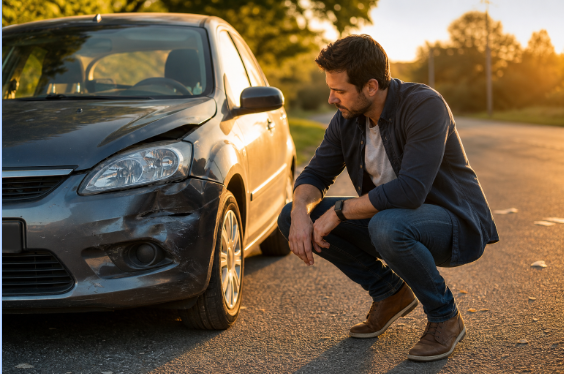
Once you are in a safe place, look over the vehicle without crawling underneath it or trying to remove parts. Watch for cracked, detached, or sagging bumpers; uneven body-panel gaps; broken lamps, mirrors, trim, or wipers; cracked glass; and doors, hoods, or trunks that no longer close smoothly.
Also, look beneath the vehicle for fresh fluid. Scraped paint can be more than cosmetic if it exposes metal to moisture, and a seemingly small bumper crack can spread with vibration or temperature changes.
Look for Signs of Hidden Damage
A vehicle may look nearly normal while damage is hidden behind the exterior panel. A bumper cover can conceal crushed reinforcement components, broken mounting tabs, loose wiring, damaged parking sensors, or bent brackets. An impact near a wheel can also affect the tire, wheel, steering, suspension, or alignment.
Pay attention over the next few trips. Warning signs include pulling to one side, a vibrating steering wheel, new rattles, uneven tire wear, unusual wind noise, warning lights, or a steering wheel that no longer sits straight while driving. These symptoms warrant a prompt inspection.
Pay Attention to Safety Systems
Many current vehicles rely on cameras, radar, and other sensors for features such as automatic emergency braking, lane alerts, blind-spot monitoring, and parking assistance. A small impact near a bumper, grille, mirror, windshield, or rear hatch can affect sensor position or visibility.
Because crash-avoidance features can complicate repairs, ask whether the affected systems need diagnostic testing, aiming, or calibration after body work is completed. A dashboard warning light is important, but the absence of one does not automatically confirm that every feature is working as intended.
Decide Whether the Vehicle Is Safe to Drive
Do Not Drive If:
- Anyone who is injured, dizzy, or feels unwell.
- You see a fluid leak, smoke, or smell something burning.
- The steering feels loose, difficult, or unpredictable.
- The vehicle pulls sharply, shakes, or cannot stop normally.
- A tire, wheel, bumper, door, or other component is loose.
- Airbags deployed or new warning lights appeared.
A Short Drive May Be Possible When:
No one needs urgent care, the vehicle has no leaks or smoke, the tires and lights appear secure, and the brakes and steering feel normal. Even then, drive only as far as necessary to reach a safe location or nearby inspection facility. A short drive is not proof that the vehicle is fully safe or repaired.
Prepare for the Insurance Process
Notify your insurer according to your policy requirements and provide a factual description of the incident. Have the date, time, location, photos, other driver’s information, witness details, report number, and any inspection notes available. Insurance rules, reporting thresholds, and claim procedures can vary by state and policy, so review your own coverage rather than relying on assumptions.
Schedule a Professional Inspection
A qualified inspection can distinguish cosmetic damage from issues that affect safety or long-term reliability. Depending on the impact area, the review may include body-panel alignment, bumper and underbody components, suspension and wheel checks, diagnostic scans, paint damage, and camera or radar calibration verification.
Avoid Common Post-Crash Mistakes
- Do not assume a small dent means a small repair.
- Do not wash away evidence before taking photos.
- Do not ignore a loose bumper, a damaged tire, a leak, or a warning light.
- Do not discard damaged parts, receipts, or repair documents too soon.
- Do not delay care for new pain, stiffness, headaches, or dizziness.
- Do not approve repairs without asking which safety systems will be checked.
Common Questions About Minor Accidents
Can a Minor Accident Cause Hidden Damage?
Yes. Internal brackets, sensors, wiring, suspension parts, and structural areas can be affected even when exterior damage appears limited.
How Soon Should a Vehicle Be Inspected?
Arrange an inspection as soon as practical, especially if you notice warning lights, new noises, leaks, steering changes, or uneven panel gaps.
Is It Safe to Drive After a Small Bump?
It depends on the vehicle’s condition, not simply the speed or appearance of the crash. Leaks, loose parts, handling changes, and warning lights are reasons not to drive.
Should a Minor Accident Be Reported?
Requirements differ by location. Contact law enforcement when there are injuries, blocked roads, major damage, suspected impairment, or a dispute about what occurred.
Can Advanced Safety Features Need Calibration?
Yes. Damage or repairs near a bumper, grille, mirror, windshield, or camera can require testing or calibration to help restore proper operation.
Conclusion
A minor collision still deserves careful attention. Checking for injuries, documenting the scene, looking beyond visible damage, monitoring how the vehicle drives, and arranging a proper inspection can prevent a small problem from becoming a larger safety or repair concern.
